Medical Coding Jobs in Saudi Arabia 2026: Skills, Certificates and Salary
Medical coding and billing jobs are some of the most clicked jobs on GetSaudiJobs. Saudi Arabia uses Australian coding standards, not the US system, so here is what employers expect, which certificates help, what coders earn and how to get hired.
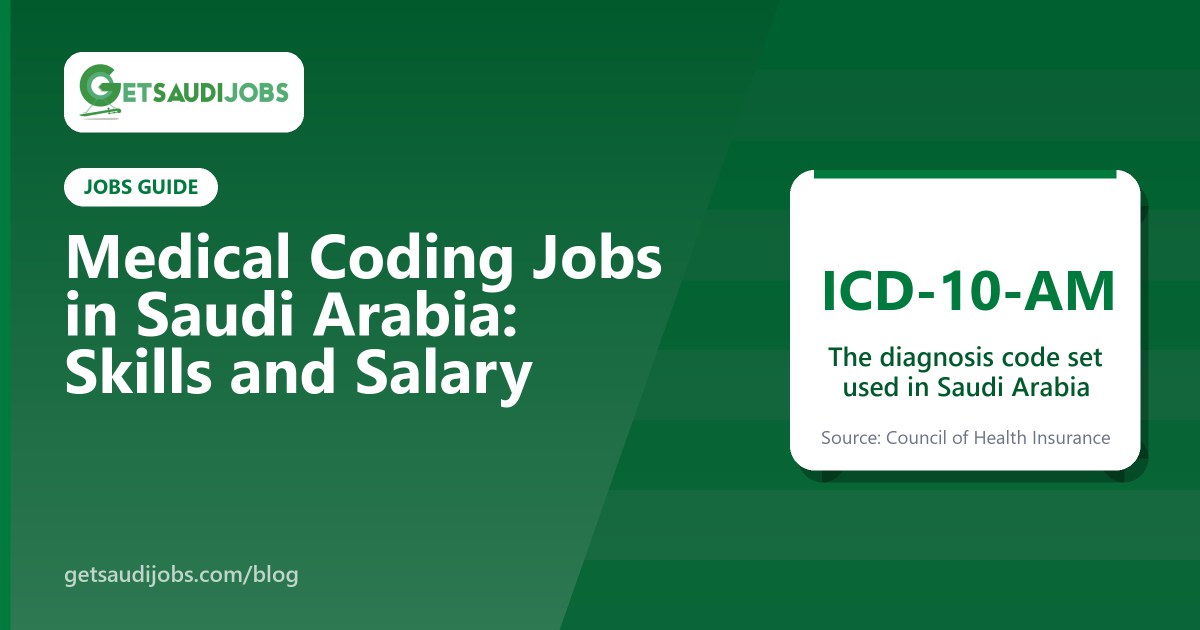
Table of contents
- How medical coding works in Saudi Arabia
- Types of coding and billing jobs
- Qualifications and certificates employers ask for
- What do medical coders earn?
- Saudization and competition
- What the job looks like day to day
- Can you work remotely?
- How to get a medical coding job
- Find medical coding jobs now
- Sources
Last reviewed: 29 October 2026. Coding standards and insurer rules are updated regularly; check the Council of Health Insurance (CHI) and the employer's requirements before you apply.
Short answer: medical coding jobs in Saudi Arabia need strong knowledge of ICD-10-AM for diagnoses, ACHI for procedures and the Saudi Billing System (SBS), plus experience with insurance claims. Most coders earn about SAR 5,000 to SAR 10,000 a month, and certified coders with Saudi or Gulf experience are at the top of that range. Most jobs are in Riyadh hospitals, insurers and revenue cycle companies.
Searches for "medical coding jobs in Saudi Arabia", "medical coder jobs" and "medical billing jobs in Saudi Arabia" have some of the highest click-through rates on GetSaudiJobs: about one in five people who see us in Google click. That tells us people want specific, practical answers. Here they are.
Key takeaways
- Saudi Arabia uses the Australian coding system: ICD-10-AM, ACHI and the Australian Coding Standards (ACS), not ICD-10-CM and CPT.
- Private health insurance claims run through NPHIES, the national platform, and are billed with SBS codes set by CHI.
- CPC, CCS or CCA certificates help, but employers value ICD-10-AM and SBS training and Gulf claims experience most.
- Typical pay: SAR 5,000–10,000 a month for coders, more for team leads and auditors.
- The government is training Saudi nationals as coders, so expect more competition for junior roles.
How medical coding works in Saudi Arabia
If you've worked in US coding, the biggest change is the code sets. In Saudi Arabia:
- ICD-10-AM (the Australian modification of ICD-10) is used to code diagnoses in all care settings.
- ACHI (the Australian Classification of Health Interventions) is used for inpatient procedures.
- The Australian Coding Standards (ACS) set the rules for applying both.
- The Saudi Billing System (SBS), built by CHI, is the national billing code set for private insurance claims, including outpatient services.
Claims from private hospitals and clinics are sent to insurers through NPHIES, the National Platform for Health Information Exchange. Coders who understand how a coding error leads to a rejected NPHIES claim are in demand, because rejections cost hospitals money.
Types of coding and billing jobs
- Inpatient and outpatient coders in hospitals, coding from clinical notes and discharge summaries.
- Coding auditors and quality reviewers, checking coded records before claims go out.
- Medical billing and claims specialists, preparing and submitting claims and handling rejections.
- Insurance approval (pre-authorisation) staff, working between doctors and insurers.
- Revenue cycle management (RCM) analysts and team leads, often in Riyadh-based RCM companies serving several hospitals.
- Clinical documentation improvement (CDI) specialists, usually doctors or nurses who help clinicians document cases correctly.
Qualifications and certificates employers ask for
Most adverts ask for a degree or diploma in health information management, nursing, pharmacy, medicine or a life science, plus two or more years of coding experience. Certificates that appear most often in Saudi adverts:
- CCS (Certified Coding Specialist, AHIMA), widely respected for inpatient coding.
- CPC (Certified Professional Coder, AAPC), common among coders trained for US work.
- ICD-10-AM / ACHI / SBS courses, including programmes endorsed by CHI and run with providers such as AAPC.
- Health information or coding qualifications from Australia, which match the Saudi code sets directly.
A US certificate alone isn't enough for most hospital jobs. If you trained on ICD-10-CM and CPT, take an ICD-10-AM and ACHI course before you apply, and say so on your CV. Some hospitals also ask health information staff to be classified by the Saudi Commission for Health Specialties (SCFHS). Check the advert, as this decides your Iqama profession. Doctors can read our guide to doctor jobs in Saudi Arabia, which explains SCFHS classification step by step.
What do medical coders earn?
| Role | Typical monthly salary (SAR) |
|---|---|
| Junior coder / billing officer | 4,000–6,500 |
| Medical coder (2–5 years, certified) | 6,000–10,000 |
| Senior coder / coding auditor | 9,000–14,000 |
| RCM or coding team lead | 12,000–20,000 |
Typical ranges from 2026 Saudi job adverts and salary surveys (Glassdoor, PayScale, ERI). Not official rates.
Hospital offers often include housing or a housing allowance, transport, medical insurance and annual flights. RCM companies may pay a higher salary with fewer allowances, so compare the whole package. There's no income tax.
Saudization and competition
The Saudi Health Council and CHI have run programmes to train Saudi nationals in medical coding and place them with private hospitals, insurers and claims departments. In practice, junior coding and billing roles are increasingly filled by Saudis, while experienced, certified coders, auditors and trainers are still recruited from abroad, especially from India, the Philippines, Egypt, Jordan and Pakistan.
If you're an expat, your best chances are in roles that need experience: inpatient coding, auditing, coding education and team leadership.
What the job looks like day to day
A hospital coder in Riyadh typically works through a queue of discharged inpatient files or outpatient visits each shift. You read the doctor's notes, operation reports and test results, assign ICD-10-AM diagnosis codes and ACHI procedure codes following the Australian Coding Standards, and send queries to doctors when the notes are unclear. Billing colleagues then map services to SBS codes and submit claims through NPHIES.
The work is target-driven. Employers track how many charts you code per day, your accuracy in audits and how many claims are rejected because of coding. These errors cause the most rejections, and fixing them is what makes a coder valuable:
- Missing or vague documentation, so the code can't be supported when the insurer reviews the claim.
- Wrong principal diagnosis, especially when a patient has several conditions.
- Missing additional diagnoses, such as complications and comorbidities, which affect the payment.
- Procedure and diagnosis that don't match, or services billed without the required prior approval.
- Using US habits, such as CPT-style procedure coding, instead of ACHI and SBS.
Can you work remotely?
Some revenue cycle companies offer hybrid or remote coding once you've passed probation, but most Saudi employers want coders on site, at least at first, because the work involves patient records and data protection rules. If you're applying from abroad, expect an on-site hospital or office job with a work visa sponsored by the employer. Be careful with "work from home" coding offers that ask you to pay for training or registration first.
How to get a medical coding job
- Learn the Saudi code sets. Put ICD-10-AM, ACHI, ACS and SBS in your CV's skills section, with your training dates.
- Show numbers. Employers like accuracy rates, charts coded per day and claim rejection rates you've reduced.
- Name the systems you've used, such as hospital information systems and claims platforms.
- Keep your CV to two pages and put certificates at the top. Our CV guide for Saudi jobs shows the format.
- Prepare for a coding test. Many hospitals give you real cases to code at interview.
Your employer sponsors your work visa and pays the fees; never pay an agent. Our Saudi work visa guide explains the steps, and our average salary guide helps you judge an offer.
Find medical coding jobs now
Create a free account, upload your CV and browse healthcare jobs in Saudi Arabia, healthcare jobs in Riyadh and insurance jobs, or search for "medical coder" on GetSaudiJobs.
Sources
- Council of Health Insurance (CHI), Saudi Billing System Coding Standards (ICD-10-AM, ACHI, ACS, SBS)
- BMC Health Services Research (2025), The development of the Saudi Billing System
- Saudi Health Council decision on training national cadres in medical coding
- Salary surveys: Glassdoor (Riyadh), PayScale and ERI SalaryExpert (2026), and GetSaudiJobs job adverts